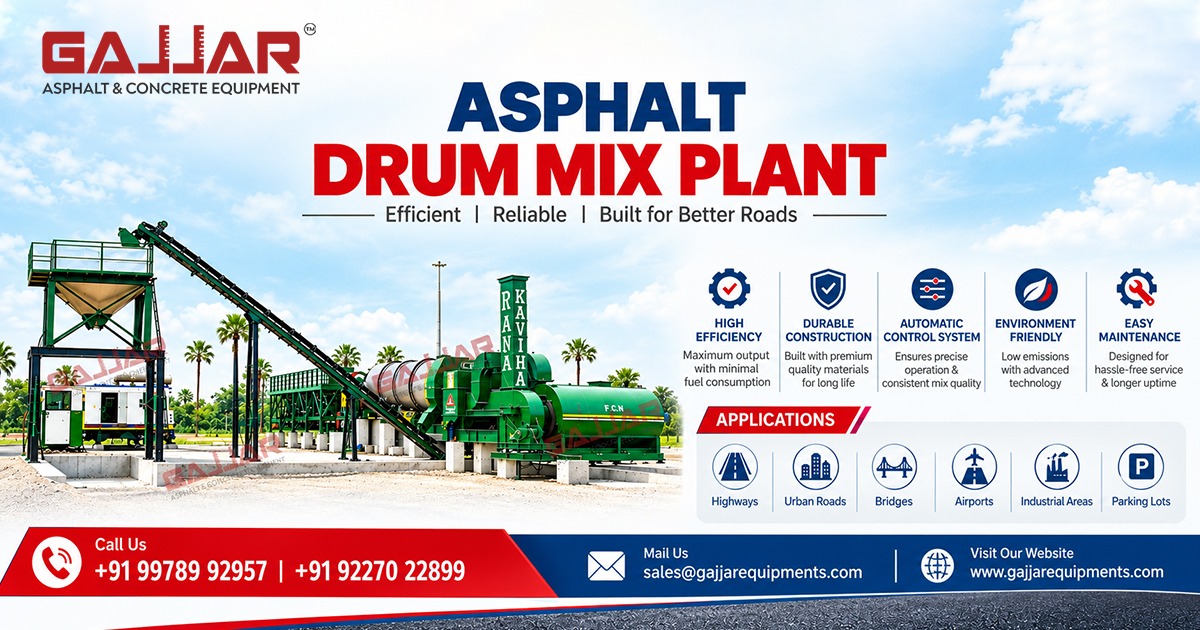

Asphalt drum mix plants play a vital role in road construction by producing hot mix asphalt with consistent quality and efficient production. However, continuous operation, high temperatures, abrasive aggregates, and dust exposure can cause equipment wear and unexpected breakdowns.
For road contractors, infrastructure developers, and plant operators, regular maintenance is essential to minimize downtime, control operating costs, and maintain consistent asphalt production.
Gajjar Equipments Pvt. Ltd., Ahmedabad, Gujarat, provides asphalt drum mix plant solutions designed to support dependable performance for road construction projects.
Understanding common asphalt drum mix plant maintenance issues helps operators identify early warning signs, schedule preventive maintenance, and improve overall plant efficiency.
1. Common Maintenance Issues in Asphalt Drum Mix Plants
The following are some of the most frequent maintenance challenges encountered during asphalt drum mix plant operation.
1.1 Burner Problems and Inconsistent Heating
The burner generates the heat required to dry aggregates and achieve the desired mixing temperature. Burner-related issues can affect fuel consumption, production quality, and operational safety.
- Common issues: Blocked fuel nozzles, dirty burner components, ignition failures, and incorrect air-to-fuel ratios.
- Warning signs: Unstable flames, excessive smoke, irregular heating, or difficulty maintaining the required temperature.
- Maintenance solutions: Clean burner components, inspect fuel lines, check combustion settings, and maintain the ignition system according to manufacturer recommendations.
1.2 Drum Wear and Internal Component Damage
The drying and mixing drum continuously handles hot aggregates, making it vulnerable to abrasion and thermal stress.
- Common issues: Worn drum flights, damaged internal liners, loose fasteners, and material buildup.
- Warning signs: Reduced drying efficiency, uneven material flow, unusual vibration, or declining production output.
- Maintenance solutions: Inspect drum flights and liners regularly, tighten loose components, and replace excessively worn parts.
1.3 Conveyor Belt Misalignment and Wear
Conveyor systems transport aggregates and other materials between different sections of the plant. Poor belt alignment can interrupt material movement and reduce production efficiency.
- Common issues: Belt slippage, damaged belt edges, worn rollers, and misaligned pulleys.
- Warning signs: Material spillage, unusual belt movement, excessive noise, and uneven conveyor operation.
- Maintenance solutions: Check belt tension, inspect pulleys and rollers, correct alignment, and replace damaged belt sections when necessary.
1.4 Dust Collector and Bag Filter Problems
Dust collection systems control airborne particles generated during aggregate handling and drying.
Their performance affects environmental compliance, housekeeping, and plant operation.
- Common issues: Clogged filter bags, damaged bags, leaking ductwork, and inadequate airflow.
- Warning signs: Increased differential pressure, visible dust emissions, or reduced suction.
- Maintenance solutions: Monitor pressure readings, inspect filter bags, check seals and ducts, and maintain the cleaning system according to operating requirements.
1.5 Aggregate Feeding and Cold Bin Blockages
Cold aggregate bins and feeders maintain the material supply required for continuous asphalt production. Blockages or inconsistent feeding can disrupt the mix proportions.
- Common issues: Bridging, blocked chutes, feeder belt problems, and inaccurate feed rates.
- Warning signs: Irregular aggregate flow, fluctuating production, and inconsistent aggregate gradation.
- Maintenance solutions: Inspect bin outlets, clean material pathways safely, verify feeder operation, and calibrate feeding systems at appropriate intervals.
1.6 Bearing, Gearbox, and Lubrication Failures
Rotating equipment relies on properly maintained bearings, gearboxes, chains, and drive systems. Insufficient lubrication or contamination can accelerate component failure.
- Common issues: Lubricant degradation, bearing wear, overheating, and gearbox leakage.
- Warning signs: Unusual noise, excessive vibration, increased operating temperature, or lubricant leaks.
- Maintenance solutions: Follow lubrication schedules, check lubricant levels, inspect seals, and monitor equipment temperatures and vibration.
1.7 Bitumen Pump and Pipeline Blockages
Bitumen must remain within its specified handling temperature range to flow properly through pumps and pipelines.
- Common issues: Hardened bitumen deposits, pump seal wear, leaks, and insufficient heating.
- Warning signs: Reduced bitumen flow, inconsistent binder dosing, pump overheating, or visible leakage.
- Maintenance solutions: Maintain specified bitumen temperatures, inspect pump seals and pipelines, and follow approved cleaning and shutdown procedures.
1.8 Excessive Fuel Consumption
Higher-than-expected fuel consumption can increase asphalt production costs and indicate an underlying equipment problem.
- Common causes: Wet aggregates, inefficient combustion, air leakage, poor insulation, and incorrect burner settings.
- Warning signs: Rising fuel use per tonne of asphalt, longer drying cycles, and unstable operating temperatures.
- Maintenance solutions: Monitor fuel consumption, optimize combustion, inspect insulation and air seals, and manage aggregate moisture effectively.
2. How to Prevent Frequent Asphalt Drum Mix Plant Breakdowns
Preventive maintenance helps operators identify problems before they cause costly production interruptions.
- Daily inspection: Check the burner, conveyor belts, drive systems, lubrication points, and visible leaks.
- Routine cleaning: Remove accumulated dust and material deposits from designated areas using safe procedures.
- Scheduled lubrication: Lubricate bearings, chains, and other components according to the equipment manufacturer’s instructions.
- Component inspection: Examine drum flights, mixing paddles, filter bags, belts, and fasteners for wear.
- Performance monitoring: Record operating temperatures, fuel consumption, vibration, and dust collector pressure.
- Electrical maintenance: Inspect sensors, wiring, control panels, and electrical connections with the equipment safely isolated.
- Spare parts planning: Maintain essential replacement components to reduce delays when repairs become necessary.
- Maintenance documentation: Record inspections, repairs, recurring faults, and component replacement dates.
3. Recommended Asphalt Drum Mix Plant Maintenance Schedule
A structured maintenance schedule helps plant operators maintain equipment reliability and plan servicing around production requirements.
| Maintenance frequency | Key activities |
| Daily | Inspect burner operation, conveyors, visible leaks, temperatures, and unusual noises. |
| Weekly | Check belt alignment, fasteners, lubrication points, and dust collection performance. |
| Monthly | Inspect wear components, drive systems, electrical connections, and sensor accuracy. |
| Periodically, as specified | Service gearboxes, inspect critical mechanical components, calibrate instruments, and assess structural wear. |
4. Why Regular Maintenance Matters for Asphalt Drum Mix Plants
Consistent maintenance provides several operational and commercial benefits for road construction businesses.
- Reduced downtime: Early fault detection helps prevent unexpected shutdowns during critical projects.
- Improved production consistency: Properly maintained burners, feeders, and mixing systems support stable operating conditions.
- Lower operating costs: Timely servicing can reduce excessive fuel consumption and expensive emergency repairs.
- Longer equipment life: Replacing worn components before they damage other parts helps protect the investment.
- Better environmental performance: Maintaining dust collection systems helps control emissions and material loss.
- Improved workplace safety: Routine inspections help identify mechanical, electrical, and thermal hazards before maintenance work begins.
5. Frequently Asked Questions
Q1: What are the most common maintenance issues in asphalt drum mix plants?
A1: Common issues include burner faults, drum wear, conveyor belt misalignment, clogged dust collector filters, lubrication failures, and inaccurate temperature sensors.
Q2 How often should an asphalt drum mix plant be inspected?
A2: Operators should perform basic inspections daily, conduct more detailed checks weekly and monthly, and follow the manufacturer’s recommended servicing intervals.
Q3: Why does an asphalt drum mix plant consume excessive fuel?
A3: High fuel consumption may result from wet aggregates, inefficient combustion, air leakage, poor insulation, or incorrect burner settings.
Q4: How can dust collector problems be identified?
A4: Common indicators include increased differential pressure, visible dust emissions, reduced airflow, and damaged or clogged filter bags.
Q5: How can asphalt drum mix plant downtime be reduced?
A5: Regular inspections, preventive maintenance, timely replacement of worn components, equipment monitoring, and proper spare parts planning help reduce downtime.
Contact Gajjar Equipments Pvt. Ltd. in Ahmedabad, Gujarat, to explore asphalt drum mix plant solutions for your road construction requirements.
Mobile and WhatsApp: +91 78787 50076 | +91 92270 22899
Email: sales@gajjarequipments.com
Website: http://www.gajjarequipments.com
View Product: Click here