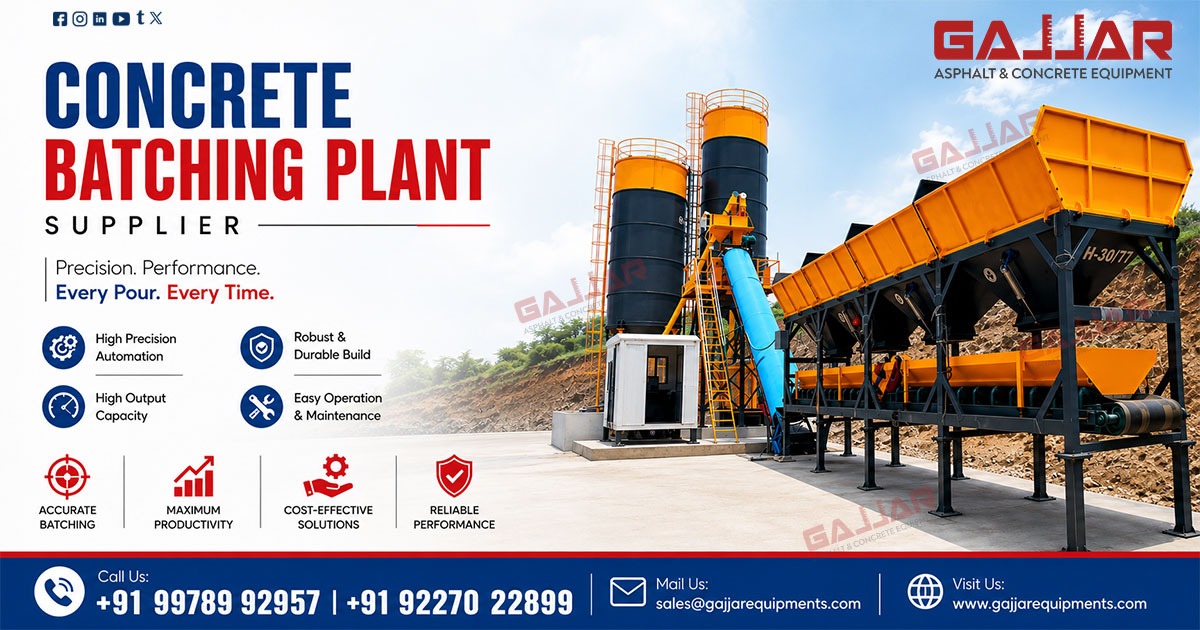
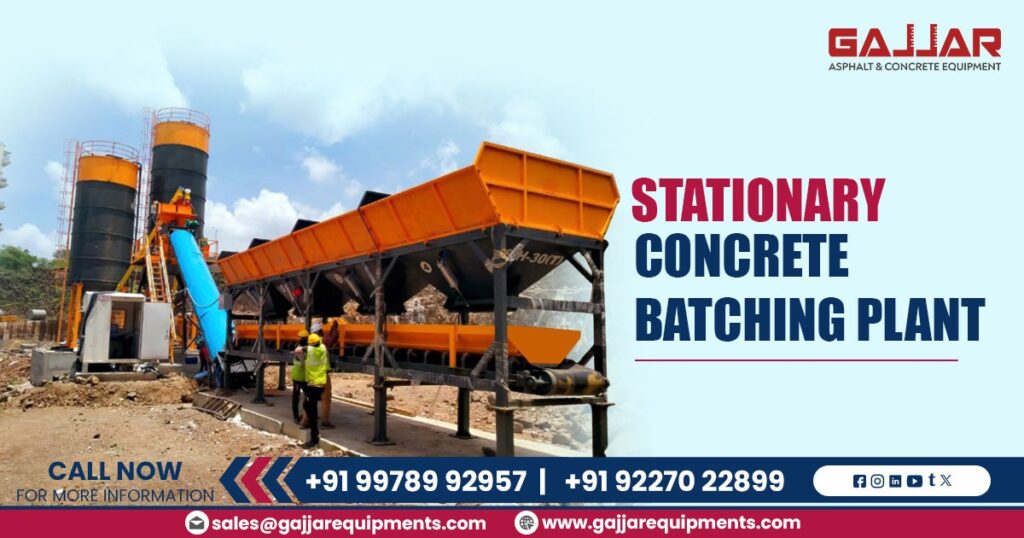
A stationary concrete batching plant is a cornerstone of high-volume concrete production, ensuring efficiency, consistency, and quality in construction projects.
Unlike mobile batching plants, stationary models are designed for long-term operations, making them ideal for infrastructure developments, commercial buildings, and industrial applications. Let’s explore the key components that contribute to their seamless functionality.
1. Aggregate Storage and Handling System
Aggregates, such as sand, gravel, and crushed stone, are stored in bins or silos. The plant uses conveyors or skip hoists to transfer these materials to the mixing unit. Precision in handling aggregates ensures a well-balanced concrete mix.
2. Cement Storage and Feeding System
Cement is stored in silos, which protect it from moisture contamination. The screw conveyor system transports cement from the silo to the mixing unit, maintaining accuracy in proportioning.
3. Water Dosing System
A carefully calibrated water metering system guarantees the correct water-to-cement ratio, affecting concrete strength and workability. Some advanced plants integrate automated moisture sensors to adjust water input based on aggregate conditions.
4. Admixture System
Chemical admixtures enhance specific concrete properties such as strength, durability, and setting time. The batching plant features an admixture dosing unit, which ensures precise and uniform dispersion in the mix.
5. Mixing Unit
The heart of the batching plant, the mixing unit, typically consists of either a twin-shaft mixer, planetary mixer, or drum mixer, depending on the required output and application. It ensures homogeneity and consistency by thoroughly blending materials.
6. Control System
Modern plants integrate a fully automated control panel, allowing operators to monitor and adjust parameters efficiently. Advanced systems incorporate PLC-based technology with user-friendly interfaces for seamless operation.
7. Discharge and Delivery System
Once mixed, the concrete is discharged into transit mixers, dump trucks, or directly onto site molds. A well-designed discharge system minimizes waste and ensures smooth workflow.
Advantages of a Stationary Concrete Batching Plant
- High Production Capacity – Ideal for large-scale projects requiring consistent concrete output.
- Precision in Mix Designs – Automated systems enhance accuracy in material batching.
- Durability & Longevity – Designed for continuous operation with minimal maintenance.
- Environmental Efficiency – Dust collection systems reduce emissions, promoting sustainability.
Stationary batching plants are indispensable for construction firms demanding superior concrete quality with reliable output. Whether for roadways, bridges, or industrial complexes, investing in a high-performance batching plant optimizes production and efficiency.
Discover GAJJAR make extensive range of ready-mix concrete batching plants, designed to maximize productivity while maintaining strict environmental and safety compliance.
Get in touch at +91-92270 22899 or email us at sales@gajjarequipments.com for expert guidance, competitive pricing, and tailor-made solutions. Build with confidence—build smarter, faster, and stronger!