
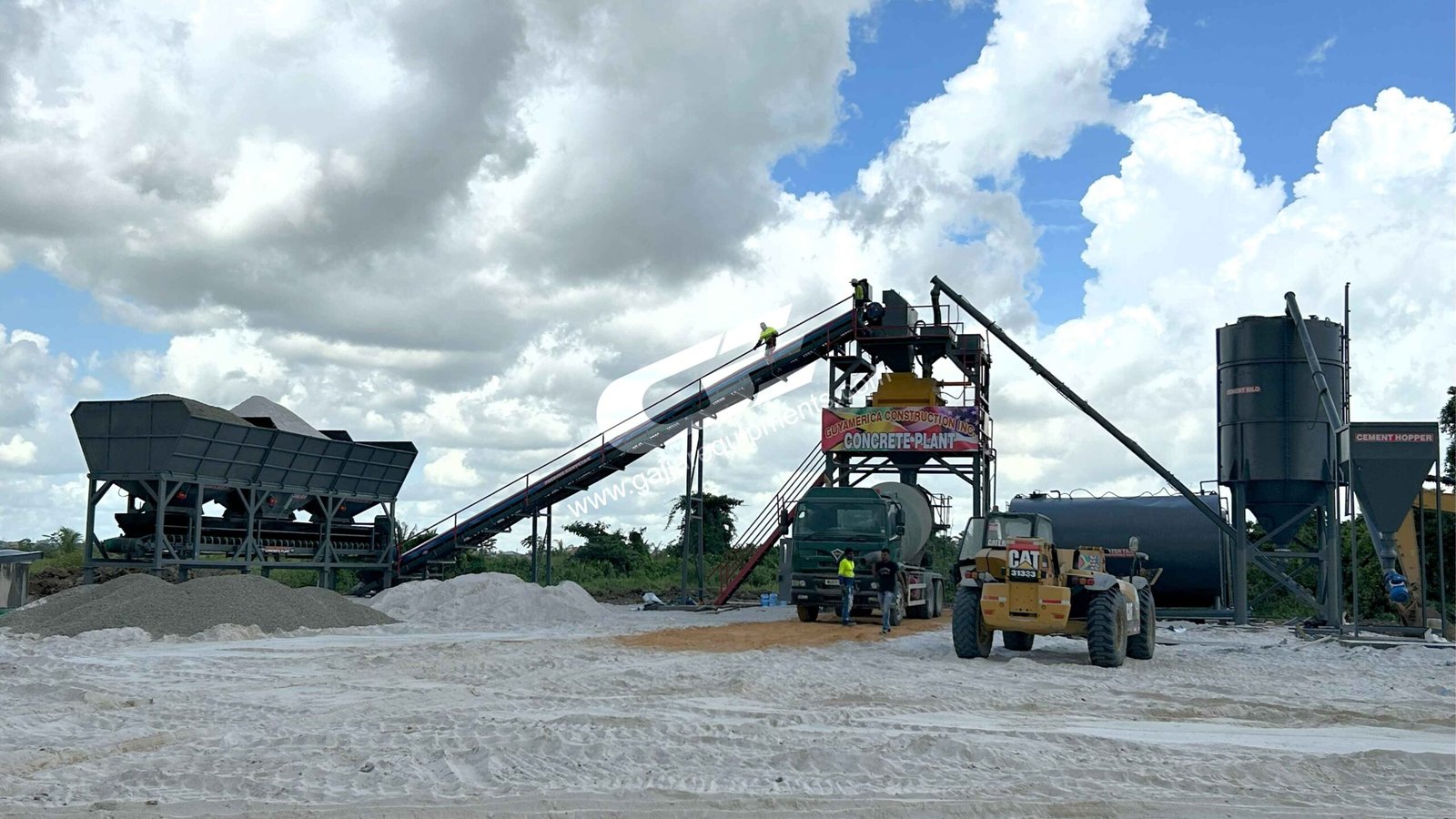
Aggregates such as sand, gravel, and crushed stone are stored in separate bins or hoppers. Each type of aggregate is weighed separately to ensure the correct proportions. The weighed aggregates are then fed into the mixer using conveyor belts or skip hoists. This step ensures that the right amount of each aggregate is used in the mix.
Cement is stored in silos to keep it dry and free from contamination. The required amount of cement is dispensed into the mixer. Water and any necessary additives are measured and added to the mix. The precise measurement of water is crucial for achieving the desired concrete consistency and strength.
The mixer combines the aggregates, cement, water, and additives. This can be done in various types of mixers, such as twin-shaft mixers, pan/drum mixers, or planetary mixers. The mixing process ensures that all the materials are thoroughly combined to produce a homogeneous concrete mix. This step is essential for ensuring the quality and uniformity of the concrete. The duration of the mixing process can vary depending on the type of mixer and the specific requirements of the concrete mix. Typically, it takes a few minutes to achieve a uniform mix.
Once the mixing is complete, the concrete is discharged from the mixer. This can be done through a discharge chute or directly into a concrete transport vehicle. The mixed concrete is then transported to the construction site using concrete mixer trucks or other delivery vehicles. These trucks are equipped with rotating drums to keep the concrete agitated and prevent it from setting during transport. Upon arrival at the construction site, the concrete is placed into the desired formwork and compacted to remove any air pockets, ensuring a strong and durable structure.

These bins store different types and sizes of aggregates, such as sand, gravel, and crushed stone. They are usually divided into multiple compartments to hold various aggregate sizes. The bins are equipped with gates at the bottom to control the flow of aggregates onto the conveyor belts.
Conveyor belts transport aggregates from the bins to the mixing unit. They ensure a continuous and controlled flow of materials. Some plants use skip hoists instead of conveyor belts, especially in smaller plants.
The control panel is the brain of the batching plant. It allows operators to monitor and control the entire process, including, ensuring the correct amounts of aggregates, cement, water, and additives are used, controlling how long the ingredients are mixed to achieve the desired consistency, and managing the discharge of the mixed concrete into trucks or other containers.
Cement silos store cement in bulk. They are typically cylindrical structures made of steel. The cement is fed into the silos using pneumatic systems and is discharged through screw conveyors or pneumatic systems to the mixing unit.
These tanks store water and various additives, such as admixtures and coloring agents. The water tank is usually equipped with a pump to supply water to the mixing unit. Additive tanks have dosing systems to ensure precise amounts are added to the mix.
| MODEL | GECS-60 | GECS-75 | GECS-90 | GECS-120 | GECS-160 | GECS-200 | GECS-240 |
| Concrete output capacity (m3/hr) | 60 | 75 | 90 | 120 | 160 | 200 | 240 |
| Mixer Capacity (Ltrs.) | 1500 / 1000 | 1875 / 1250 | 3000 / 2000 | 4500 / 3000 | 6000 / 4000 | 7500 / 5000 | 9000 / 6000 |
| Batch Capacity (m3) | 1 | 1.25 | 2 | 3 | 4 | 5 | 6 |
| Type of Mixer | Twin Shaft / Planetary | ||||||
| No. of Bins (In-line) | 4 | ||||||
| Weighing System | Aggregate, Cement, Water, Additive | ||||||
| Air Compressor | Yes | ||||||
| Discharge Height | 3.8 Mtrs. | ||||||
Per GAJJAR’s policy of constant upgradation of products, specifications are subject to change without prior notice.
A Stationary Concrete Batching Plant is heavy-duty construction equipment designed to produce high-quality concrete by accurately mixing cement, aggregates, water, and additives in controlled proportions. It is widely used for ready-mix concrete production, highways, bridges, commercial buildings, dams, and large-scale infrastructure development projects. These plants ensure consistent concrete quality, high production efficiency, and reliable long-term operation.
Gajjar Equipments Private Limited manufactures high-performance Stationary Concrete Batching Plants with production capacities ranging from 60 m³/hr to 240 m³/hr. Available models include GECS-60, GECS-75, GECS-90, GECS-120, GECS-160, GECS-200, and GECS-240. These plants are designed to meet different concrete production requirements for medium- and large-scale construction projects.
Gajjar Equipments' Stationary Concrete Batching Plants feature heavy-duty construction, advanced PLC-based automation, precision aggregate weighing systems, high-performance twin-shaft or planetary mixers, cement silos, conveyor systems, and water and additive dosing units. These features ensure accurate material proportioning, uniform concrete mixing, high productivity, easy maintenance, and consistent concrete quality.
Gajjar Equipments Private Limited is a trusted Stationary Concrete Batching Plant Manufacturer in India, offering durable, efficient, and technologically advanced concrete production solutions. Our plants feature robust construction, automated control systems, accurate weighing technology, and reliable mixing equipment. Ideal for ready-mix concrete plants, highways, bridges, industrial construction, and infrastructure development projects, our Stationary Concrete Batching Plants deliver dependable performance, efficient operation, and long-term durability.
WhatsApp us